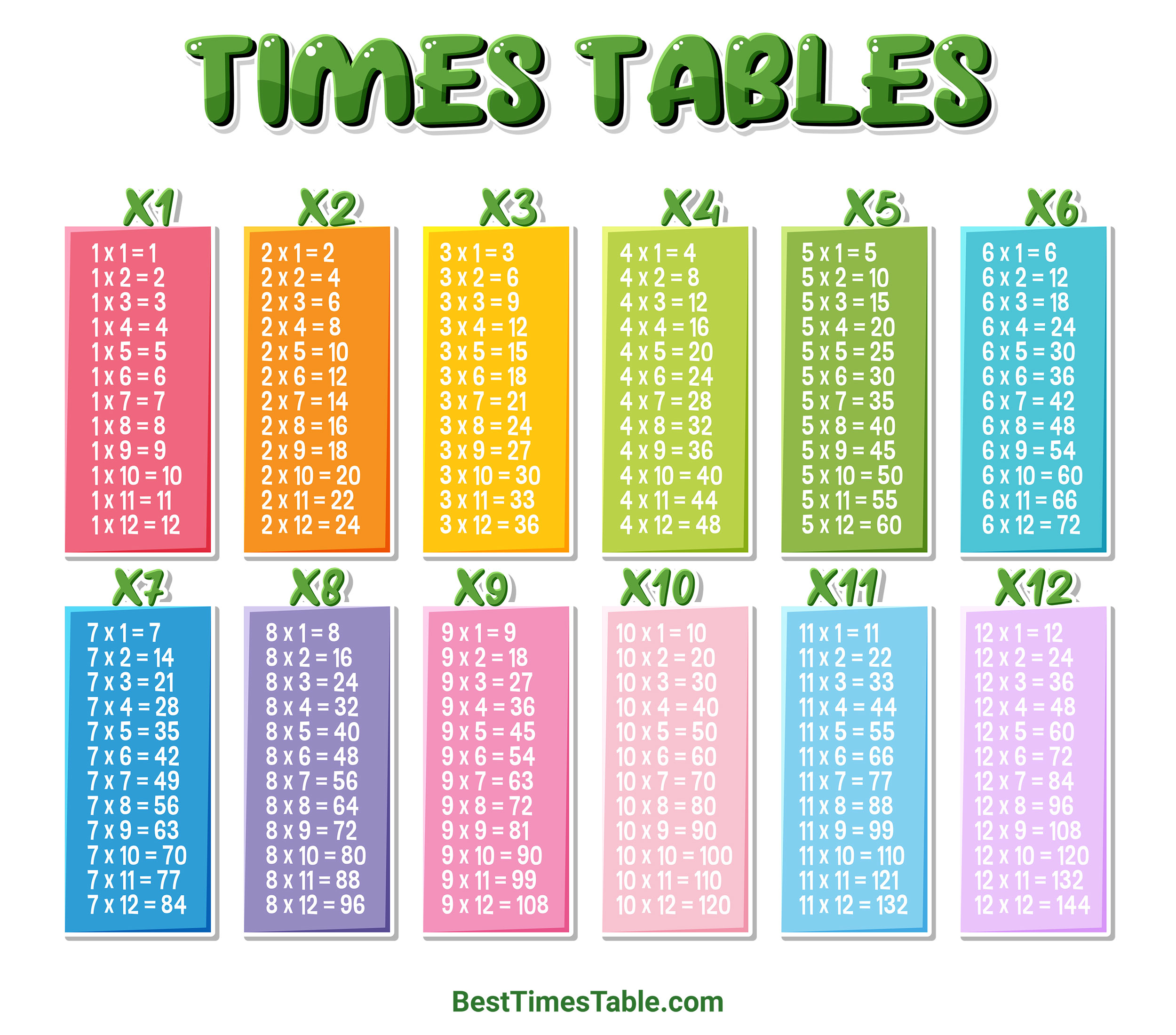
The 30 times table becomes much easier when you connect it to the 3 times table. Since 30 is 3 × 10, you can multiply by 3 first and then multiply the result by 10.
Use the interactive lesson below to learn the table of 30 from 30 × 1 to 30 × 12, recognize its number patterns, practice the multiplication facts, and learn a mental-math method that also works with larger numbers.
The shortcut
Multiply the number by 3, then multiply the result by 10.
For example: 30 × 7 → 3 × 7 = 21 → 21 × 10 = 210
Learn • Practice • Master
30 Times Table
Learn the 30 times table from 1 to 12, practice the facts you miss, then test your speed.
Multiplication chart
30 Times Table Chart
| Calculation | Answer |
|---|---|
| 30 × 1 | 30 |
| 30 × 2 | 60 |
| 30 × 3 | 90 |
| 30 × 4 | 120 |
| 30 × 5 | 150 |
| 30 × 6 | 180 |
| 30 × 7 | 210 |
| 30 × 8 | 240 |
| 30 × 9 | 270 |
| 30 × 10 | 300 |
| 30 × 11 | 330 |
| 30 × 12 | 360 |
Memory helper
See the pattern
Practice mode
Build accuracy
What is
Speed test
How many can you answer?
Answer as many 30 times table questions as you can before the timer ends.
Speed question
Mental math shortcut
Use the 3 Times Table to Multiply by 30
The quickest way to understand multiplication by 30 is to separate it into two familiar operations. First multiply by 3, then multiply that answer by 10.
This works because 30 = 3 × 10.
30 × 4 = 120
30 × 7 = 210
30 × 9 = 270
To calculate 30 × 8:
First calculate 3 × 8 = 24.
Then multiply 24 by 10.
24 × 10 = 240.
Therefore, 30 × 8 = 240.
If you already know the 3 times table, you already know the most important part of this strategy.
Number sequence
Count Forward in Steps of 30
Every answer in the 30 times table is 30 greater than the answer before it. Learning this sequence can help you find a nearby multiplication fact when you cannot recall it immediately.
60
90
120
150
180
210
240
270
300
330
360
If you know 30 × 6 = 180, add another 30:
180 + 30 = 210
so 30 × 7 = 210.
You can also move backwards through the table by subtracting 30. For example, if you know 30 × 10 = 300, subtract 30 to find 30 × 9 = 270.
Spot the pattern
What Pattern Does the 30 Times Table Follow?
Every whole-number multiple of 30 ends in 0. The tens digit also follows the pattern created by the 3 times table.
30 × 3 = 90
30 × 5 = 150
30 × 10 = 300
There is also a useful divisibility connection. Every multiple of 30 is divisible by 3, 5, 6, 10, 15 and 30.
Quick check: if you multiply a whole number by 30, the answer must end in 0 and it must also be divisible by 3.
Build from ×10
Triple the 10 Times Table
Another way to calculate the 30 times table is to use the 10 times table. Because 30 is three times 10, you can triple a corresponding 10 times table answer.
30 × 4 = 120
30 × 6 = 180
30 × 11 = 330
Both approaches are mathematically equivalent. You can multiply the original number by 3 and then by 10, or multiply it by 10 first and then triple the result.
Useful relationship
Connect the 30 Times Table to the 20 Times Table
If you already know the 20 times table, you can find a multiple of 30 by adding one more group of 10.
In other words, 30 × n = (20 × n) + (10 × n).
30 × 4 = 120
30 × 7 = 210
30 × 9 = 270
To calculate 30 × 8:
20 × 8 = 160
10 × 8 = 80
160 + 80 = 240
Therefore, 30 × 8 = 240.
This method is not always the fastest, but it shows how different multiplication tables are connected rather than existing as separate lists of facts.
Beyond the basic table
How to Multiply Larger Numbers by 30
The ×3 then ×10 strategy works with numbers much larger than 12. Once you understand the rule, there is no need to memorize a separate answer for every multiplication by 30.
30 × 15 = 450
30 × 20 = 600
30 × 25 = 750
To calculate 30 × 24:
3 × 24 = 72
72 × 10 = 720
Therefore, 30 × 24 = 720.
This is an example of using known multiplication facts and place value together to solve larger calculations mentally.
Everyday maths
Using Multiples of 30 in Real-Life Calculations
Multiplication by 30 is useful when working with quantities arranged in groups of thirty. It is also closely connected to time because 30 minutes is half an hour.
For example, four periods of 30 minutes contain:
30 × 4 = 120 minutes
120 minutes = 2 hours.
Six periods of 30 minutes equal 180 minutes, or 3 hours. This makes multiples of 30 useful for quickly converting repeated half-hour periods into minutes.
The same multiplication can be used for objects too. If one container holds 30 items, 8 containers hold 30 × 8 = 240 items.
Check your recall
30 Times Table Practice Questions
Try each question before revealing the answer. If you get stuck, multiply by 3 first and then multiply your result by 10.
What is 30 × 4?
What is 30 × 6?
If 3 × 7 = 21, what is 30 × 7?
If 30 × 8 = 240, what is 30 × 9?
What is 30 × 11?
What is 30 × 12?
Challenge yourself
Can You Multiply These Numbers by 30?
These calculations extend beyond the standard 1-to-12 table. Try to solve them mentally using ×3 then ×10.
What is 30 × 15?
What is 30 × 25?
What is 30 × 40?
What is 30 × 50?
Quick answers
30 Times Table Questions
What is 30 × 5?
30 × 5 = 150.
What is 30 × 6?
30 × 6 = 180.
What is 30 × 7?
30 × 7 = 210.
What is 30 × 8?
30 × 8 = 240.
What is 30 × 9?
30 × 9 = 270.
What is 30 × 10?
30 × 10 = 300.
What is 30 × 11?
30 × 11 = 330.
What is 30 × 12?
30 × 12 = 360.
What is the easiest way to multiply by 30?
Multiply the number by 3 and then multiply the result by 10. For example, 30 × 8 can be calculated as 3 × 8 = 24, followed by 24 × 10 = 240.
What are the first 12 multiples of 30?
The first 12 positive multiples of 30 are 30, 60, 90, 120, 150, 180, 210, 240, 270, 300, 330 and 360.