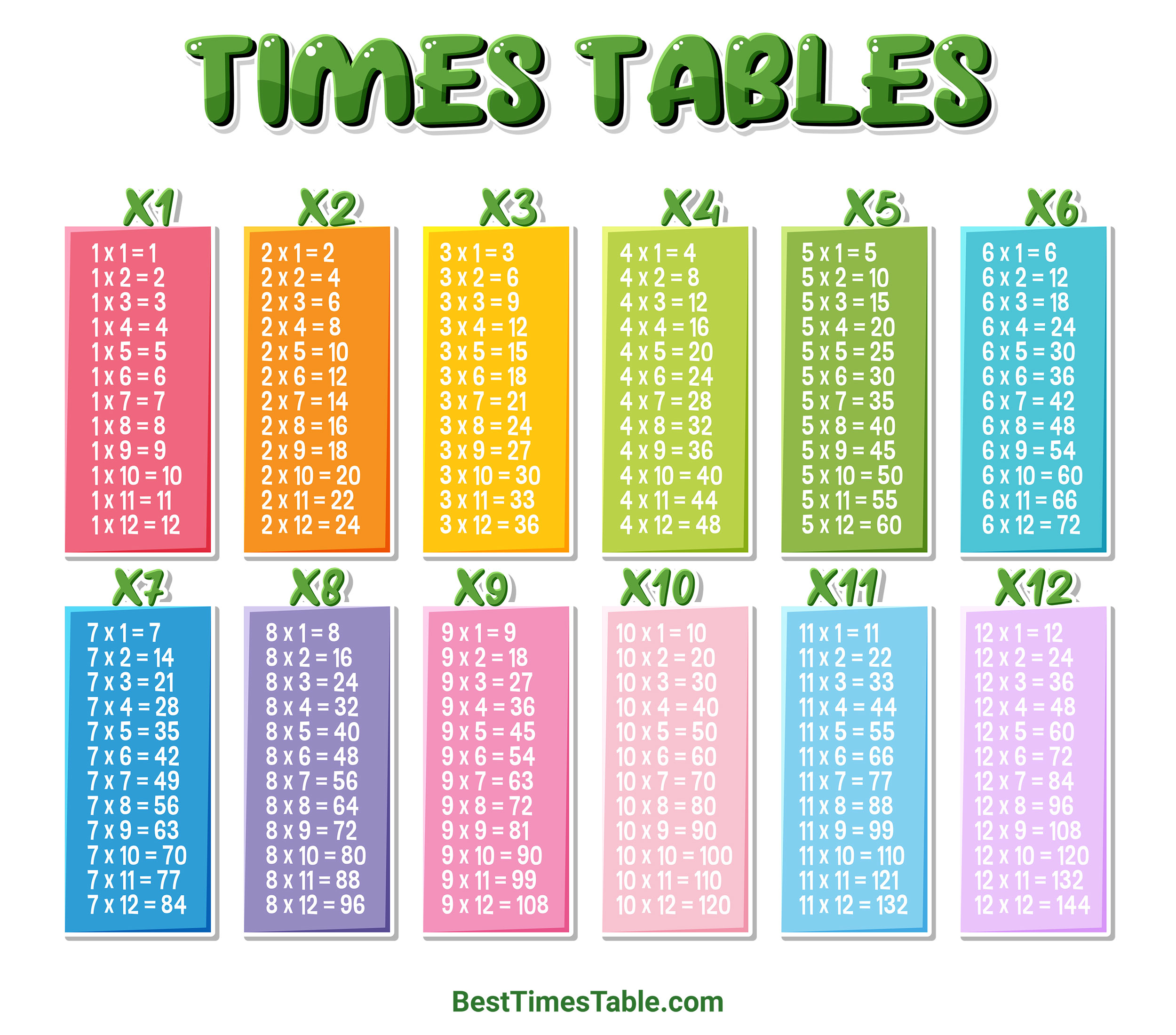
The 5 times table is one of the easiest multiplication tables to recognize because every answer ends in 0 or 5.
Use the interactive lesson below to learn the table of 5 from 5 × 1 to 5 × 12, discover its simple number patterns, and practice until the answers become automatic.
The pattern to remember
Every multiple of 5 ends in either 5 or 0.
For example: 5 × 7 = 35 and 5 × 8 = 40
Learn • Practice • Master
5 Times Table
Learn the 5 times table from 1 to 12, practice the facts you miss, then test your speed.
Multiplication chart
5 Times Table Chart
| Calculation | Answer |
|---|---|
| 5 × 1 | 5 |
| 5 × 2 | 10 |
| 5 × 3 | 15 |
| 5 × 4 | 20 |
| 5 × 5 | 25 |
| 5 × 6 | 30 |
| 5 × 7 | 35 |
| 5 × 8 | 40 |
| 5 × 9 | 45 |
| 5 × 10 | 50 |
| 5 × 11 | 55 |
| 5 × 12 | 60 |
Memory helper
See the pattern
Practice mode
Build accuracy
What is
Speed test
How many can you answer?
Answer as many 5 times table questions as you can before the timer ends.
Speed question
Easy number pattern
Look for Answers Ending in 5 or 0
The most useful pattern in the 5 times table is the final digit of each answer.
The answers alternate between a number ending in 5 and a number ending in 0.
10
15
20
25
30
35
40
45
50
55
60
Quick check: if the answer to a 5 times table question does not end in 0 or 5, it cannot be correct.
Odd and even shortcut
Use the Multiplier to Predict the Last Digit
There is an even more precise pattern you can use.
When 5 is multiplied by an odd number, the answer ends in 5. When 5 is multiplied by an even number, the answer ends in 0.
= 15
= 30
= 45
Because 3 and 9 are odd, the answers end in 5. Because 6 is even, its answer ends in 0.
Mental math trick
Find the 5 Times Table Using the 10 Times Table
Multiplying by 5 is the same as multiplying by 10 and then taking half.
To calculate 5 × 8:
First calculate 10 × 8 = 80.
Half of 80 is 40.
Therefore, 5 × 8 = 40.
This shortcut is especially useful for larger numbers because multiplying by 10 is usually easy.
Half = 20
Half = 35
Half = 60
So 5 × 4 = 20, 5 × 7 = 35, and 5 × 12 = 60.
Real-world connection
Use a Clock to Understand Multiples of 5
A clock is a useful way to visualize counting in fives. Each number on an analog clock represents another five minutes.
5 minutes
30 minutes
60 minutes
This means that knowing the 5 times table can also make it easier to read minutes on an analog clock.
5, 10, 15, 20, 25, 30… is both the 5 times table and the pattern used to count minutes around a clock.
Try it yourself
5 Times Table Practice Questions
Try answering these questions mentally. Use the 0-or-5 pattern or the half-of-10 shortcut if you need help.
What is 5 × 3?
What is 5 × 6?
Use the 10 times table to find 5 × 8.
What is 5 × 9?
What is 5 × 12?
Fast recall
Useful 5 Times Table Facts to Remember
The ending pattern makes the 5 times table relatively easy, but it is still useful to recognize common multiplication facts instantly.
5 × 5 = 25
5 × 6 = 30
5 × 7 = 35
5 × 8 = 40
5 × 9 = 45
5 × 10 = 50
Practice these until you can answer without skip counting. The interactive Practice and Test modes above can help you build faster recall.
Quick answers
5 Times Table Questions
What is 5 × 5?
5 × 5 = 25.
What is 5 × 6?
5 × 6 = 30.
What is 5 × 7?
5 × 7 = 35.
What is 5 × 8?
5 × 8 = 40. You can also calculate 10 × 8 = 80 and then take half.
What is 5 × 9?
5 × 9 = 45.
What is 5 × 12?
5 × 12 = 60.
What pattern does the 5 times table follow?
The answers alternate between numbers ending in 5 and numbers ending in 0. When the multiplier is odd, the product ends in 5; when the multiplier is even, it ends in 0.
What is the easiest way to calculate multiplication by 5?
One useful mental method is to multiply the number by 10 and then divide the result by 2. For example, 10 × 8 = 80, and half of 80 is 40, so 5 × 8 = 40.